

Cities are changing, and it feels like they're being designed for shorter stays these days. Think about it – places are popping up that make it easy to grab what you need without going far. This shift is happening everywhere, from big metropolises to smaller towns, and it's changing how we live and interact with our surroundings. It's a pretty big deal, and it brings both good things and some tricky parts.
Key Takeaways
- The 15-minute city concept aims to put daily needs within a short walk or bike ride, cutting down on car use and pollution.
- This design can lead to cleaner air, stronger local businesses, and better community connections.
- However, there are worries about fairness, how to actually build these areas, and potential issues for people with disabilities.
- While cities in Europe and Asia are leading the way, places like Paris and Shanghai are adapting the model, and the impact of short-term rental Asia markets is a growing concern.
- Cities are also needing to become more flexible, with telework and new transport options shaping how we live and move around.
The Rise Of The 15-Minute City
A Human-Centric Approach To Urban Living
Think about your typical day. How much time do you spend just getting from point A to point B? For a lot of us, it's a significant chunk. The 15-minute city concept flips that script. It's all about making sure that the places you need for daily life – like grocery stores, parks, schools, and maybe even your doctor's office – are all within a short walk or bike ride from your home. It's a way of designing neighborhoods so that you don't have to rely on a car for everything. The goal isn't to make the entire city fit into a 15-minute bubble, but rather to create many small, self-sufficient areas within the larger city. This approach puts people and their daily needs at the center of urban planning, moving away from car-centric designs that have dominated for decades.
Origins Of The Compact Community Concept
The idea of having everything close by isn't exactly new. It's like a modern take on older ideas. Back in the early 1900s, people like Ebenezer Howard were already thinking about 'Garden Cities' – self-contained communities with everything residents needed. Then, in the 1920s, Clarence Perry talked about 'neighborhood units' that were designed to be somewhat independent. Even the 'compact city' idea from the 1970s shares some of these principles. More recently, places like Poundbury in the UK, built in the 1990s, tried to create neighborhoods where you could easily get to amenities. The 15-minute city model, popularized by Carlos Moreno around 2016, really picked up steam, especially after the pandemic, as people started rethinking how they live and work in cities.
Essential Functions Within Reach
So, what does 'everything' really mean in a 15-minute city? It's about having access to the things that make up your daily routine. This includes:
- Shopping: Local shops, markets, and grocery stores.
- Work: Co-working spaces or offices within a reasonable distance, or the ability to work from home more easily.
- Leisure: Parks, playgrounds, community centers, cafes, and restaurants.
- Education: Schools and childcare facilities.
- Healthcare: Doctor's offices and pharmacies.
- Services: Post offices, banks, and other local services.
The push for 15-minute cities is partly a response to growing urban populations and the need for more sustainable ways of living. With cities taking up more space and contributing significantly to carbon emissions, rethinking how we design them is becoming really important. This model aims to cut down on car use, which in turn can help improve air quality and make cities more pleasant places to be.
This shift is about creating more livable, connected neighborhoods where people can easily access what they need without long commutes. It's a vision for a more human-scale urban environment.
Benefits Of Proximity-Based Urban Design
Reduced Pollution And Improved Air Quality
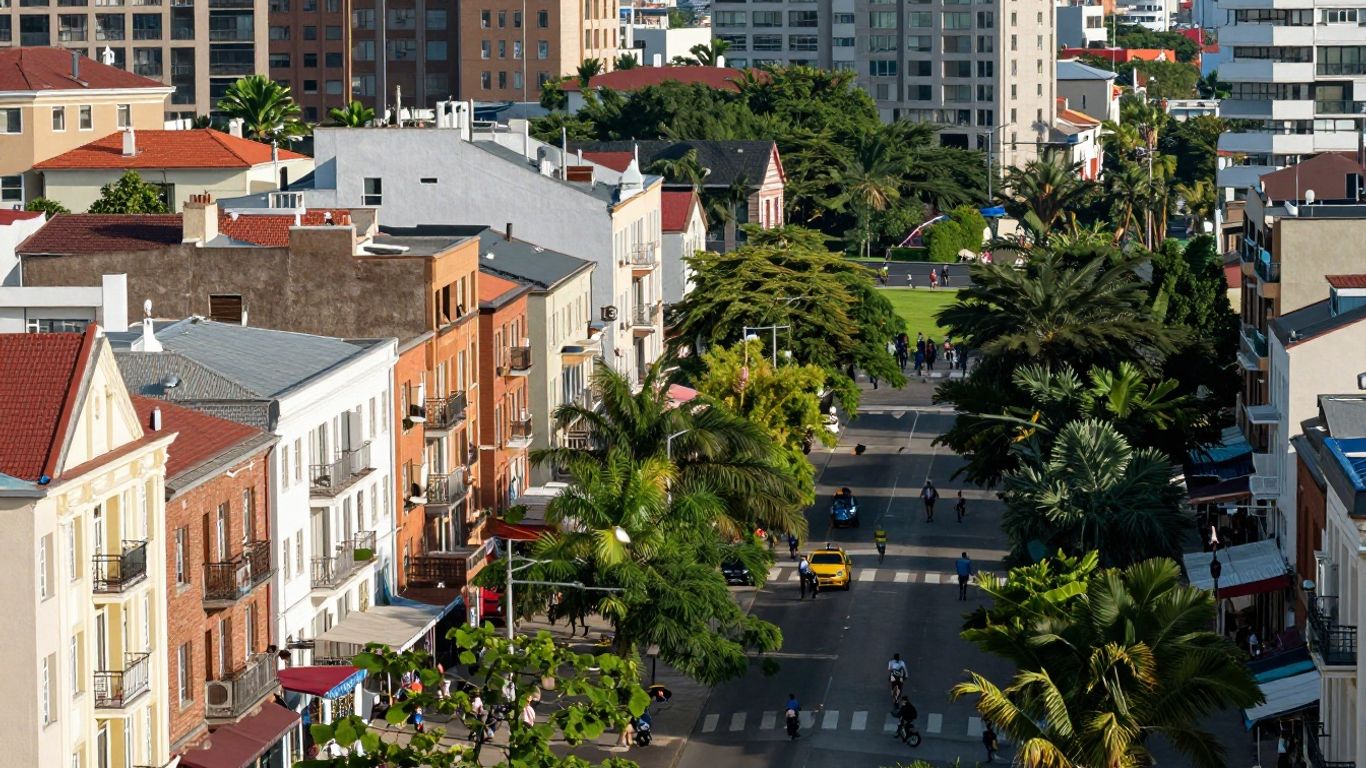
When we don't have to drive everywhere, cars and buses don't produce as much exhaust. This is a big deal because air pollution from vehicles is linked to a lot of health problems. By making it easier to walk or bike to places, we cut down on traffic. Less traffic means cleaner air for everyone to breathe. It also helps with noise pollution, which can be pretty stressful and even cause hearing issues.
Boosted Local Economies And Employment
Think about it: if people can easily walk to local shops and services, they're more likely to spend their money there. This helps small businesses in the neighborhood thrive. It can create more jobs right where people live, making it easier for residents to find work without a long commute. This kind of setup can really give a boost to the local economy, even in smaller towns.
Enhanced Public Health And Wellbeing
When you're not stuck in traffic or breathing exhaust fumes, you just feel better. Plus, having everything close by encourages people to get out and move more. Walking to the store or a park is way better for your health than sitting in a car. This increased physical activity can help with things like stress, loneliness, and even depression. Cleaner air and more green spaces also play a big part in making people feel good.
Strengthened Social Opportunities
Living in a neighborhood where you can easily meet up with friends or join local activities makes a big difference. Instead of traveling far for entertainment or to see people, you have options right around the corner. This can lead to stronger community ties and make people feel more connected to where they live. It's easier to build relationships when you're bumping into neighbors at the local cafe or park.
The idea is that by having daily needs met within a short walk or bike ride, communities become more vibrant and residents experience a better quality of life. It's about making everyday living more convenient and less stressful.
Challenges And Criticisms Of The 15-Minute Model
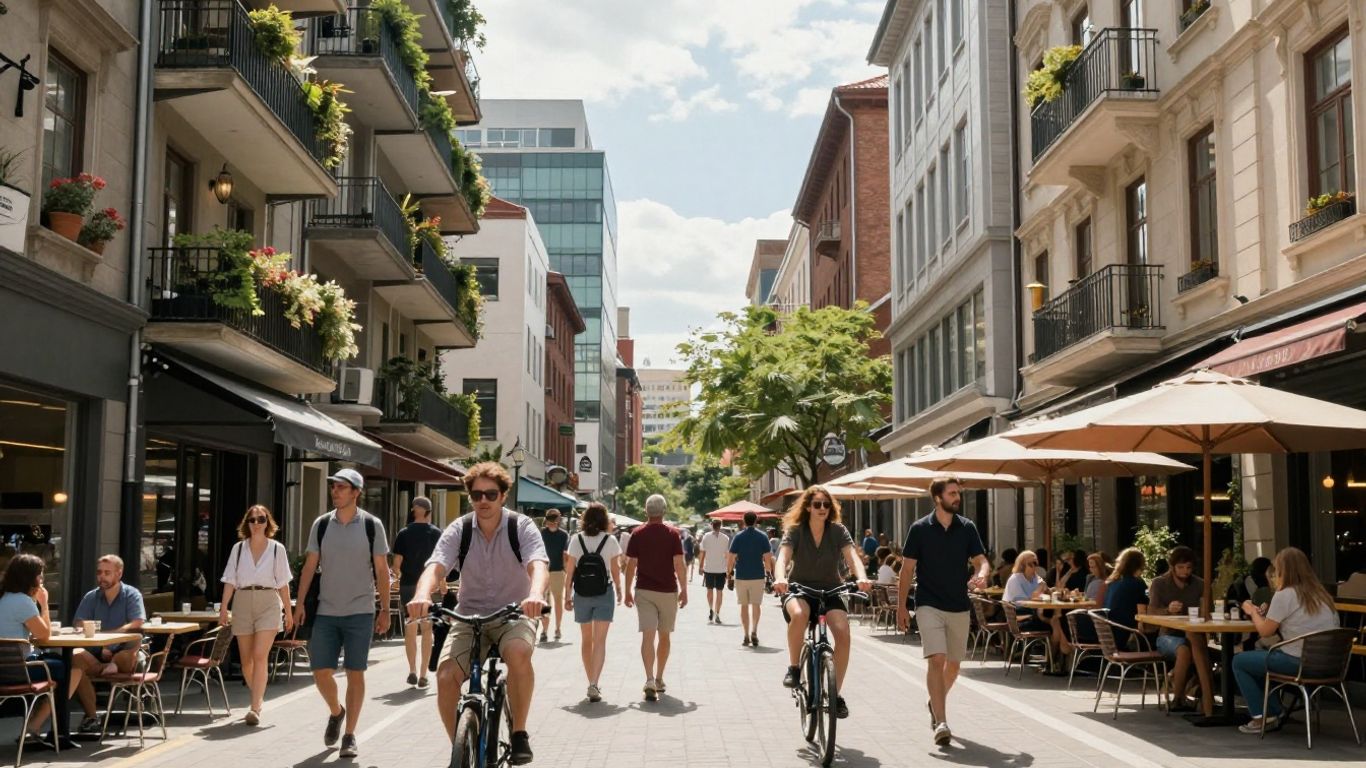
While the idea of having everything you need close by sounds pretty great, it's not all smooth sailing. Implementing the 15-minute city concept comes with its own set of headaches and valid concerns that planners and residents are grappling with.
Potential For Class Divisions And Inequality
One of the biggest worries is that this model could actually make things harder for people with less money. If desirable neighborhoods become super convenient, they might get pricier, pushing out lower-income families. It could create a situation where only the well-off can afford to live in these "complete communities," while others are priced out or have to travel further for basic needs. This could lead to a city divided by income, not just by geography.
Obstacles In Implementation And Infrastructure
Let's be real, changing how a city is built is a massive undertaking. For places that are already established, especially older cities with complex layouts, retrofitting them to fit the 15-minute model is a huge challenge. It means rethinking roads, building new pedestrian paths, maybe even changing zoning laws. It takes a lot of planning, money, and coordination, and there are bound to be bumps along the road.
Concerns Over Increased Congestion
It sounds counterintuitive, right? The whole point is to reduce car use, but some worry it could actually make traffic worse in certain areas. If you funnel people into specific zones for their daily needs, and the infrastructure outside those zones isn't updated, you could end up with more traffic jams on the routes connecting these neighborhoods. It's a balancing act to make sure you're not just shifting the problem.
Mobility Issues For People With Disabilities
This is a really important point. The 15-minute ideal often focuses on walking and biking, which works well for many. But what about people who can't easily walk or bike long distances? The focus on a short, convenient timeframe might overlook the needs of individuals with disabilities, potentially making it harder for them to access services if the planning doesn't explicitly account for their specific mobility requirements. It's a reminder that "convenient" can mean different things to different people.
The push for hyper-local living, while well-intentioned, needs careful consideration to avoid creating new barriers. Planners must ensure that accessibility for all residents, regardless of physical ability or income level, remains a top priority. Simply assuming everyone can walk or bike everywhere overlooks the diverse needs within a community.
Global Adoption Of The 15-Minute City Concept
It's pretty wild how quickly the idea of the 15-minute city has spread across the globe. What started as a concept, really, has become a blueprint for how cities are thinking about urban living. It’s not just a few places dabbling in it; we're seeing it pop up in different forms everywhere.
Pioneering Cities In Europe And Asia
Europe, especially Paris, has been a major player. Carlos Moreno, who really brought this idea to the forefront, is from Paris, and the city has been actively working on making neighborhoods more self-sufficient. It's kind of amazing that in Paris, like 94% of people are already within a five-minute walk of a bakery. That's a pretty good head start, right? Barcelona is another example, really focusing on making streets more walkable and bike-friendly. They're even using digital models to figure out how changes will affect the city. Then you have Shanghai, which is aiming for a huge percentage of its residents to be within a 15-minute walk of public services and green spaces by 2035. That's a big commitment.
North American Adaptations And Debates
Over in North America, things are a bit more… complicated. Cities like Ottawa are embracing the idea, calling them '15-minute neighborhoods' and linking them to concepts like being 'connected' and 'complete'. They seem to really like how it helps build stronger communities. But it's not all smooth sailing. Some places, like Edmonton, have had to put out statements to reassure people that these plans aren't about restricting movement, especially after some pretty wild conspiracy theories started circulating online. It's a shame that a concept aimed at improving daily life has become so controversial, with some folks even calling it a plot or a socialist idea. It makes you wonder how these discussions even get so heated.
Examples From South America And Australia
South America is also getting on board. Bogota, for instance, has struggled with traffic for ages, and the 15-minute city concept is seen as a way to prioritize walking and eco-friendly transport. It's about creating a city that's more livable. In Australia, Melbourne, a really big and growing city, is looking at this model to make sure its communities are well-served now and in the future. It's a huge task for a city that's already so spread out, requiring a lot of rethinking of existing infrastructure. The push for these kinds of urban planning frameworks is really about making cities more sustainable and people-focused, even if the path to implementation varies wildly from place to place. It's a global conversation, for sure, and it's interesting to see how different cultures and existing city structures shape the approach. The implementation of the '15-minute city' concept in medium-sized towns shows that it's not just for megacities either.
The Impact Of Short-Term Rentals On Urban Fabric
It’s kind of wild how quickly places like Airbnb have changed how we think about staying in a city, right? On the one hand, it’s super convenient for travelers. But on the other, it’s really messing with the housing situation for people who actually live there. We're seeing entire apartment buildings get turned into mini-hotels, which just eats up housing stock that locals desperately need.
Housing Stock Depletion In Key Cities
This whole short-term rental boom has had a pretty noticeable effect on the availability of long-term housing. In some cities, a significant number of units that could be rented out to residents are now being used for tourists. This isn't just a minor inconvenience; it can seriously impact rental prices and make it harder for people to find a place to live. It's like a game of musical chairs, but with apartments.
Here's a look at how many entire homes were rented out for 60+ days a year on platforms like Airbnb in a few major Canadian cities:
| City | Number of Entire Homes Rented | Percentage of Total Housing Stock (Approx.) |
|---|---|---|
| Montreal | 4,500 | 0.5% |
| Toronto | 5,000 | 0.4% |
| Vancouver | 4,200 | 0.6% |
These numbers might seem small, but when you consider the tight rental markets in these places, it adds up. It's a big reason why finding an affordable place can feel impossible sometimes. This issue is a big part of the conversation around housing availability in cities.
Navigating Regulatory Grey Zones
Lots of these short-term rental operations have historically existed in a bit of a legal fog. They often avoid the same rules and taxes that hotels have to deal with. This creates an uneven playing field and makes it tough for cities to manage. It's a real headache for local governments trying to keep things fair and orderly.
Principles For Effective Short-Term Rental Regulation
To get a handle on this, cities are starting to look at some clear rules. The idea is to make sure these rentals benefit the community without taking away too much from the long-term housing supply. Some common ideas being discussed include:
- One host, one rental: This means a person can only rent out one property, not multiple units.
- No full-time, entire-home rentals: Limiting rentals to just a room in someone's primary residence, or for a limited number of days per year.
- Platforms responsible for enforcement: Making the booking sites themselves accountable for making sure hosts follow the rules.
The shift towards short-term rentals has definitely complicated urban living. It's a balancing act between welcoming visitors and protecting the homes of residents. Cities are still figuring out the best way to manage this new reality, and it's a conversation that's far from over.
It's a complex issue, and finding the right balance is key to keeping our cities livable for everyone.
Adapting Cities For Flexible Living
The Need For Flexible Density
Cities are pretty useful, right? They're efficient places for people to live and work. But we've learned over the past few years that we need them to be a bit more adaptable. Think about it – pandemics, extreme weather, or even just wanting a change of pace. We need cities that can handle people spreading out a bit when needed, without completely falling apart. The good news is, we've already got a lot of the tools for this. Remote work, flexible office spaces, and on-demand services are already here. The real trick is getting governments to actually make this a priority. Lots of people who work with their brains have gotten a taste of working from home or setting their own hours, and they're not exactly thrilled about going back to the old 9-to-5 commute. This also means traditional public transport might take a hit. Nobody really wants to be crammed onto a bus or train with a bunch of strangers if they can help it. We're already seeing people look for alternatives, like electric bikes for shorter commutes, and this trend is likely to continue as people find new ways to get around without relying on crowded transit.
Telework And The Future Of Commuting
Remember when working from home felt like a distant dream for most? Well, that dream is now a reality for many, and it's changing how we think about our daily grind. The idea of a mandatory, daily commute is starting to feel a bit old-fashioned. People are realizing they can be productive, maybe even more productive, without being stuck in traffic or a crowded train. This shift means cities might need to rethink how they're laid out. Instead of everything being centered around a downtown core that everyone has to travel to, we might see more local hubs and neighborhood centers pop up. It's about making work more accessible from where people live, rather than forcing everyone to travel long distances.
Innovation In Personal Mobility Alternatives
With fewer people commuting daily, the way we move around our cities is also up for a makeover. We're seeing a rise in options beyond the traditional car or bus. Think about electric scooters, shared bikes, and even more advanced personal electric vehicles. These alternatives are often better for the environment and can help reduce traffic jams. Plus, they offer more flexibility for getting around those shorter, local trips that the 15-minute city concept encourages. It's not just about getting from A to B anymore; it's about how we can move in a way that's convenient, sustainable, and fits our changing lifestyles. This means cities might need to invest more in safe bike lanes, pedestrian paths, and charging infrastructure for these new mobility options. It's a big change, but one that could make our cities more livable and less congested.
The way we live and work has changed, and our cities need to catch up. We need to build places that are adaptable, allowing for more flexibility in where and how we spend our time. This means rethinking density, embracing remote work, and finding new ways to get around that don't rely on old, crowded systems.
So, What's Next for Our Cities?
It's pretty clear that the way we think about cities is changing, and fast. The idea of living, working, and playing all within a short walk or bike ride isn't just a nice thought anymore; it's becoming a real plan for many places. While there are definitely kinks to work out, like making sure everyone can actually access these areas and that we don't just create new problems, the push towards more local living seems to be gaining serious momentum. We're seeing a shift away from needing to constantly travel long distances, which could mean less traffic, cleaner air, and maybe even stronger local communities. It's a big change, and it's going to be interesting to see how it all plays out in the years to come.
Frequently Asked Questions
What exactly is a 15-minute city?
A 15-minute city is a type of city design where people can reach most of the things they need for daily life, like stores, schools, and parks, by walking or biking for about 15 minutes from their home. It's all about making neighborhoods more convenient and less reliant on cars.
Why are cities trying to be like this now?
Cities are looking at this design to help with problems like too much traffic, air pollution, and people not getting enough exercise. By having things closer, people might drive less, which means cleaner air and healthier lifestyles. It also helps local businesses by bringing more people to their area.
Are there any downsides to this idea?
Some people worry that this design could make it harder for poorer people to live in certain areas or that it might cause more traffic jams if not planned carefully. There are also concerns about whether it makes it difficult for people with disabilities to get around.
Is this idea new?
The main idea isn't totally new. Thinkers have talked about making neighborhoods self-sufficient for a long time. The 15-minute city concept was brought up more recently and became popular, especially after the pandemic when people started thinking more about local living.
Why have I heard some strange things about 15-minute cities?
Sadly, this idea has been twisted into wild stories online, with some people claiming it's a way to control people or stop them from traveling. These claims are not true. City planners are just trying to make neighborhoods better places to live.
How does this affect places like Airbnb?
When more people live in neighborhoods where everything is close by, it can sometimes mean fewer homes are available for long-term renters because some owners might prefer to rent them out for short stays. Cities are trying to create rules to manage this so there are enough homes for everyone.
The Moveandstay editorial team writes about serviced living, workspaces, and city guides across Asia-Pacific.
Read next
Serviced Offices Surge in Popularity as Businesses Embrace Flexible Leasing
May 3, 2026
Hong Kong Serviced Apartment Market Buzzes with Sales and Investment Activity Amidst Shifting Valuations
May 3, 2026

ONYX Hospitality Group Elevates Shama Serviced Apartments with New Lifestyle Concept and Ambitious Expansion
Apr 26, 2026