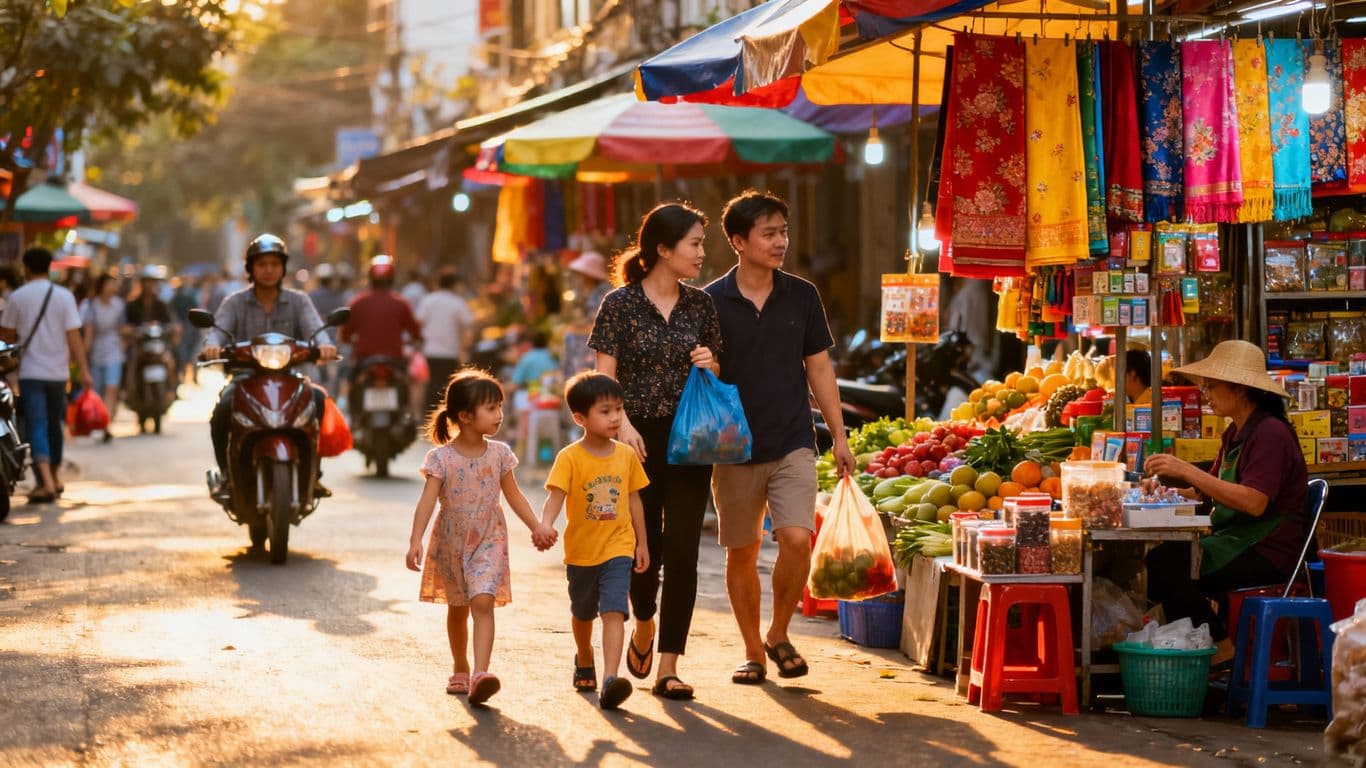
Thinking about raising a family in Hanoi? It's a big question, and the costs can really add up. From where you live to how your kids learn, and even just the day-to-day stuff, it all plays a part. We're going to break down what you can expect so you can get a clearer picture of the family cost of living in Hanoi.
Key Takeaways
- Housing costs in Hanoi can vary significantly, with central, modern apartments being the most expensive.
- International school tuition is a major expense for families, often costing thousands of dollars annually.
- Daily living expenses, including utilities and groceries, are generally affordable, though air conditioning use can increase electricity bills.
- Childcare options like nannies are common for expats, with salaries being a notable cost, while imported baby goods can be pricey.
- Healthcare is relatively inexpensive, especially for routine visits, but private insurance is recommended for emergencies.
Understanding Housing Expenses
When you're thinking about moving to Hanoi with your family, the first big question on everyone's mind is usually about where you're going to live and, more importantly, how much it's going to cost. Housing is definitely one of the larger chunks of your monthly outgoings, but thankfully, compared to many Western cities, Hanoi remains quite reasonable.
Rental Market Overview in Hanoi
The rental market here is pretty varied. You can find everything from small, local-style apartments to large, modern places in expat-friendly compounds. Generally, you'll find that renting in Hanoi is a bit cheaper than in Ho Chi Minh City. For a decent two to three-bedroom apartment, you're likely looking at somewhere between $600 and $1,500 per month. Of course, this depends a lot on the location and the amenities offered. Smaller, less central places can be found for as little as $250 to $450 for a one-bedroom, while prime locations with all the mod cons can push the upper end of that range.
Factors Influencing Housing Costs
So, what makes one place more expensive than another? It's not just about size. Things like proximity to international schools, access to green spaces, and whether the building has a gym or a pool can really bump up the price. Newer buildings and those in areas popular with expatriates tend to command higher rents. Also, furnished apartments will naturally cost more than unfurnished ones. It’s worth doing a bit of research into different districts to see what fits your family’s needs and budget best.
Comparing Hanoi Rents to Other Cities
Let's put it into perspective. If you're coming from London or New York, Hanoi's rental prices will feel like a breath of fresh air. Even a spacious family apartment in a good Hanoi neighbourhood will likely cost significantly less than a comparable place in many major European or North American cities. For instance, while a 2-3 bedroom apartment in Hanoi might range from $600-$1,500, you could easily expect to pay double or even triple that in many Western capitals for something similar. This affordability is a big draw for families looking to stretch their budget further without sacrificing quality of life.
Educational Investment for Children
When you're raising a family in Hanoi, the cost of education for your children can really add up. It's a big part of the budget for many families, especially those looking for specific types of schooling.
International School Tuition Fees
For many expat families, or even local families who can afford it, international schools are a popular choice. These schools offer different curricula, like British or American systems, and often have smaller class sizes. However, this comes at a price. Tuition fees can vary quite a bit, but you're generally looking at anywhere from $5,000 to over $20,000 per year. In Hanoi, some of the more well-known international institutions might charge between $12,000 and $18,000 annually. It's a significant expense, often one of the largest for families living here. For example, one family mentioned spending VND10 million a month just for their eldest daughter at an international school.
Costs of Extracurricular Activities
Beyond the core school fees, there are the costs for after-school activities. Things like music lessons, sports clubs, or extra language classes are common. These can add several million dong to your monthly expenses. A child might take piano, dance, and English lessons, each with its own fee. It’s not unusual for parents to spend a considerable amount to give their children a well-rounded education. These activities are seen as important for development, but they do contribute to the overall cost.
Preschool and Alternative Education Options
Even before primary school, the costs start. Preschools, including Montessori or bilingual options, typically range from $200 to $600 per month. These are quite common in Hanoi. Some families also consider homeschooling or online learning programs, which can sometimes be more flexible or cost-effective, depending on the provider. For local families, private nursery schools can also cost around VND10 million a month, which is a substantial amount when you consider average incomes.
Vietnamese parents often prioritise their children's education, willing to spend a large portion of their income to provide what they believe is a better future. This often means making sacrifices in other areas to afford the best schooling and activities available.
Here's a rough idea of what you might expect:
- International School Tuition (Annual): $5,000 - $20,000+
- Preschool (Monthly): $200 - $600
- Extracurricular Activities (Monthly per child): VND 1,000,000 - VND 5,000,000+
It's worth noting that private and people-founded schools can sometimes offer lower tuition rates compared to purely international institutions, which might be an option for families looking for a balance between cost and quality education. Planning for these educational expenses is key when considering a move to Hanoi with children, as it can significantly impact your family budget. You can find more information on school fees in Vietnam to get a clearer picture.
Daily Living and Utility Costs
Monthly Utility Bills for Apartments
Keeping the lights on and the water running in Hanoi is generally quite reasonable. For a typical apartment, you're looking at around $60 to $80 per month for the basics – that covers electricity, water, and waste collection. Of course, if you're a big fan of air conditioning, especially during those hotter months, that electricity bill can creep up. We've heard of some families seeing bills hit $90 or even $100 if the AC is on constantly. It's something to factor in when you're budgeting.
Affordability of Internet and Mobile Services
Staying connected in Hanoi is surprisingly cheap. High-speed internet, the kind you need for streaming or video calls, usually costs about $9 to $11 a month for a fibre connection. Mobile plans are even more budget-friendly, with some offering generous data and call allowances for as little as $3 to $6. Most families find they spend less than $20 in total each month for both their home internet and mobile phones. It’s a definite plus point for the city's affordability.
Estimating Daily Food and Groceries
This is where you can really make your money go further. Eating local food is incredibly inexpensive. A meal from a street vendor might set you back just $1.50 to $2.50, and a meal for two at a local restaurant could be around $6 to $10. Even a weekly shop for groceries at local markets, focusing on fresh produce and staples, might only cost $20 to $30. However, if you find yourself frequently visiting Western-style cafes or supermarkets stocking imported goods, your food budget can easily double. For a family of four, a comfortable monthly food budget, balancing local and some imported items, might range from $200 to $350.
Here's a quick look at some common food prices:
| Item | Average Price (USD) |
|---|---|
| Street food meal | $1.50 - $2.50 |
| Local restaurant meal | $6 - $10 |
| Dozen eggs | $1.40 - $1.60 |
| 1 kg chicken fillet | $3.00 - $3.50 |
| 1 kg white rice | $1.00 - $1.50 |
The cost of food is one of the biggest advantages for families living in Hanoi. You can eat very well without spending a fortune, especially if you embrace the local cuisine and markets.
Childcare and Domestic Support
When you're raising a family in Hanoi, figuring out childcare and getting help around the house is a big part of the budget. For many expat families, hiring a nanny is the go-to option. It's pretty common for nannies to work a standard full-time schedule, say 9 am to 5 pm, Monday to Friday. The going rate can be around 100,000 VND per hour, which works out to about £3 per hour. On top of the hourly wage, there's usually an expectation of a 'Tet bonus', which is like a 13th-month salary paid around the Vietnamese New Year. You'll also want to factor in paid holidays for Tet itself, and any time you might be away. Some families also have nannies who help with light housework, like tidying up or doing dishes, especially when the little ones are napping.
Nanny and Housemaid Salaries
Salaries for domestic help can vary. A live-in housemaid, who might also be responsible for childcare, could earn around 4.5 million VND per month (£140). For nannies, the hourly rate is more common, as mentioned, but a full-time monthly salary might fall in the range of 6 to 8 million VND (£190-£250), depending on hours and responsibilities. It's worth noting that many local families rely on extended family, like grandmothers, for childcare, which is a different model to what many expats are used to.
Costs of Baby Essentials and Formula
When it comes to baby supplies, things can add up. Imported baby food, like organic purees, can be quite pricey, ranging from $1.50 to $5 (£1.20-£4) per small jar or pouch. Formula milk is also mostly imported, and you're looking at anywhere from $10 to $65 (£8-£50) for a large tin, depending on the brand. Diapers are generally comparable to prices in the US or UK, unless they are imported brands, which can double the cost. Some parents find that local diaper brands aren't as absorbent, meaning you might use more. You can often find good deals on baby clothes, especially if you look for 'Made in Vietnam' items that are factory castoffs, which can be a third of the price you'd pay for the same brands internationally.
The Role of Family in Childcare
In Vietnamese culture, there's a strong tradition of multi-generational living, meaning grandparents often play a significant role in raising children. This can mean less reliance on paid childcare for local families compared to many expat households. However, even with hired help, family involvement remains important.
Many Vietnamese parents are very invested in their children's education and development. This often means enrolling children in various activities from a young age. For instance, one family mentioned spending 10 million VND (£315) monthly on their eldest daughter's international school fees, plus additional costs for piano, dance-sports, and English lessons. Even for younger children attending private nurseries, monthly fees can be around 10 million VND (£315). This willingness to spend on education and enrichment activities is a significant factor in the overall cost of raising a family. If you're looking for reliable childcare support, apps like Nounou can connect you with professional caregivers.
Here's a rough idea of monthly costs for domestic help:
| Service | Estimated Monthly Cost (VND) | Estimated Monthly Cost (£) |
|---|---|---|
| Full-time Nanny | 6,000,000 - 8,000,000 | £190 - £250 |
| Part-time Nanny | 4,000,000 - 6,000,000 | £125 - £190 |
| Live-in Housemaid | 4,500,000 | £140 |
Keep in mind these are estimates, and actual costs can vary based on experience, hours, and specific duties. It's always a good idea to discuss expectations clearly upfront.
Healthcare and Well-being

Looking after your family's health in Hanoi involves a few different considerations, and thankfully, it's generally quite affordable compared to many Western countries. You've got options ranging from public facilities to private clinics, each with its own set of pros and cons.
Affordability of Private Healthcare
For many families, especially those new to Hanoi or seeking a higher level of comfort and English-speaking staff, private clinics and international hospitals are the go-to. A standard doctor's visit here might set you back anywhere from $20 to $50. If you need to see a specialist, expect to pay a bit more, perhaps between $50 and $100. Dental care is also reasonably priced; a routine cleaning could be around $30, and more involved treatments are significantly cheaper than what you might be used to back home. This accessibility to quality private care is a major plus for families living in the city.
Costs of Medications and Vaccinations
When it comes to medicines, you'll find that costs are generally lower than in the US or Europe. However, obtaining certain vaccines can sometimes be a bit tricky, as they can run out quickly. Some parents opt to schedule trips back home for their children's vaccinations or regular check-ups if they have a trusted paediatrician there. It's worth looking into local availability well in advance or discussing alternatives with your chosen clinic.
Health Insurance Considerations
While many everyday medical costs can be managed out-of-pocket, having health insurance is a wise move, particularly for unexpected emergencies or hospital stays. Monthly premiums can vary, but generally fall between $50 and $100, depending on your age and the level of coverage you choose. If you're employed by a local company, you might also be covered under Vietnam's national social insurance scheme. It's a good idea to compare different insurance plans to find one that best suits your family's needs and budget.
Transportation and Mobility
Getting around Hanoi as a family can be quite an adventure, and thankfully, it's generally quite affordable.
Motorbike Rental and Fuel Expenses
For many, especially expats, a motorbike is the go-to for daily commutes. Renting one monthly typically falls between $60 and $80. Fuel costs are also pretty low, with petrol costing around $1 per litre. Maintenance is usually cheap, making it a flexible and cost-effective choice for getting around the city's busy streets.
Ride-Hailing Services and Taxi Fares
If motorbikes aren't your thing, ride-hailing apps like Grab are incredibly popular and convenient. You can expect to pay roughly $1.20 to $2 for a GrabBike trip for shorter distances, or $3 to $10 for a GrabCar, depending on how far you're going. Traditional metered taxis are also available, with initial fares starting around $0.60, but many find the app-based services offer better pricing and ease of use.
Inter-City Travel Costs
When you need to venture beyond Hanoi, travelling between cities is surprisingly quick and doesn't break the bank. A one-way flight from Hanoi to another major city like Ho Chi Minh City or Da Nang usually costs between $30 and $70. This makes weekend trips or visiting family in other parts of Vietnam quite manageable.
Here's a rough idea of monthly transport costs for a family:
| Transport Method | Estimated Monthly Cost (USD) |
|---|---|
| Motorbike Rental + Fuel | $70 - $100 |
| Ride-Hailing (Daily Use) | $50 - $150 |
| Public Bus Pass (x2) | $16 - $20 |
| Occasional Inter-City | $50 - $100 |
While public transport like buses are incredibly cheap, costing about $0.25 to $0.40 per trip or around $8 for a monthly pass, they might not always be the most practical option for families with young children or lots of shopping.
Most families find that a combination of motorbike use for shorter trips and ride-hailing for longer journeys or when carrying more passengers strikes a good balance between cost and convenience. Overall, keeping your monthly transportation expenses between $30 and $60 is achievable if you stick to more budget-friendly options like public buses or a motorbike. However, frequent use of ride-hailing or domestic flights can push this figure higher.
Overall Family Budgeting in Hanoi

Estimated Monthly Budgets for Families
Putting together a realistic monthly budget for a family in Hanoi really depends on your lifestyle and what you prioritise. It's not just about the big ticket items like rent and school fees; it's the day-to-day stuff that adds up too. For a family of four, you might find yourselves spending anywhere from VND 38,000,000 to VND 70,000,000 (£1,200 - £2,200) for a comfortable living, covering housing, utilities, food, transport, and basic activities. If you're leaning towards international schooling and more Western-style amenities, that figure could easily climb to VND 95,000,000 (£3,000) or more. It’s about finding that balance that works for your family.
Impact of Lifestyle on Family Cost of Living
Your choices make a big difference. For instance, opting for local markets over imported grocery stores can save a significant amount each week. Similarly, choosing local schools or public transport over international options and private cars will impact your budget considerably. Even small things, like how often you eat out or the types of entertainment you choose, contribute to the overall monthly spend.
Here’s a rough idea of how different choices can affect your budget:
- Housing: A central, modern apartment will cost more than a place in a quieter, local neighbourhood.
- Education: International school fees are a major expense, whereas local schools are far more affordable.
- Food: Eating local street food and cooking with local produce is budget-friendly. Importing goods or dining at Western restaurants increases costs.
- Activities: Extracurriculars like music lessons or sports can add up, especially if multiple children are involved.
Financial Considerations for Parenthood
Becoming a parent, or adding to your family, brings a whole new set of expenses. Beyond the obvious costs like formula, nappies, and clothes, there are longer-term considerations. Think about saving for education, potential healthcare needs, and even setting aside funds for future family activities or travel.
Many Vietnamese families see spending on their children's education and well-being as a top priority, often willing to allocate a substantial portion of their income to ensure their children have better opportunities than they did. This cultural emphasis means that education, in particular, can be a significant line item in the family budget.
It’s wise to create a detailed budget that accounts for both current needs and future aspirations. This might involve setting up separate savings accounts for education or healthcare. Planning ahead can make managing the financial side of raising a family in Hanoi much smoother.
So, What's the Verdict?
Ultimately, figuring out the cost of raising a family in Hanoi really depends on your choices. Sending kids to international schools and opting for imported goods will definitely bump up expenses, as we've seen with families spending millions of dong on tuition alone. On the flip side, many locals manage with more modest budgets, relying on local schools and services. It seems like the biggest factor is education, with parents willing to invest heavily to give their children what they see as the best start. While Vietnam is generally affordable, especially compared to Western countries, families looking at international schooling need to budget accordingly. It’s a balancing act, for sure.
Frequently Asked Questions
What's the typical cost for renting a place in Hanoi for a family?
Renting a place in Hanoi can vary a lot. For a decent apartment with a few bedrooms, you might be looking at anywhere from $600 to $1500 per month. This depends on whether it's in a central area or a bit further out, and how modern it is. Cheaper options are available if you're okay with something more basic.
How much should I budget for international school fees?
International schools in Hanoi can be quite pricey. Annual tuition can range from around $5,000 to over $20,000. Some well-known schools might charge between $12,000 and $18,000 each year. Many Vietnamese parents choose these schools because they believe they offer a better education.
What are the monthly utility costs for a family home?
For a typical apartment, expect your monthly utility bills to be around $60 to $80. This usually covers electricity, water, and trash collection. If you use a lot of air conditioning, especially during hot months, your electricity bill could go up to $100 or more.
Is hiring a nanny or housemaid expensive in Hanoi?
Hiring help is quite common and generally affordable. A nanny or housemaid might earn around $4.5 million Vietnamese dong per month, which is about $200 USD. Some families also provide a Tet bonus, which is like a year-end bonus, usually equivalent to a month's salary.
How much does healthcare typically cost for a family?
Healthcare costs are quite reasonable. A visit to a private clinic for a general check-up might cost between $20 to $50. While many medications are cheap and available without a prescription, it's a good idea to have health insurance for bigger issues or hospital stays. Insurance plans often cost around $50 to $100 per month.
What are the average monthly expenses for a family of four?
A comfortable monthly budget for a family of four in Hanoi could be around $2,400 to $3,000. However, this can change a lot based on your lifestyle. If you choose international schools, eat out often, or buy imported goods, your expenses could easily go up to $4,000 or more.
The Moveandstay editorial team writes about serviced living, workspaces, and city guides across Asia-Pacific.