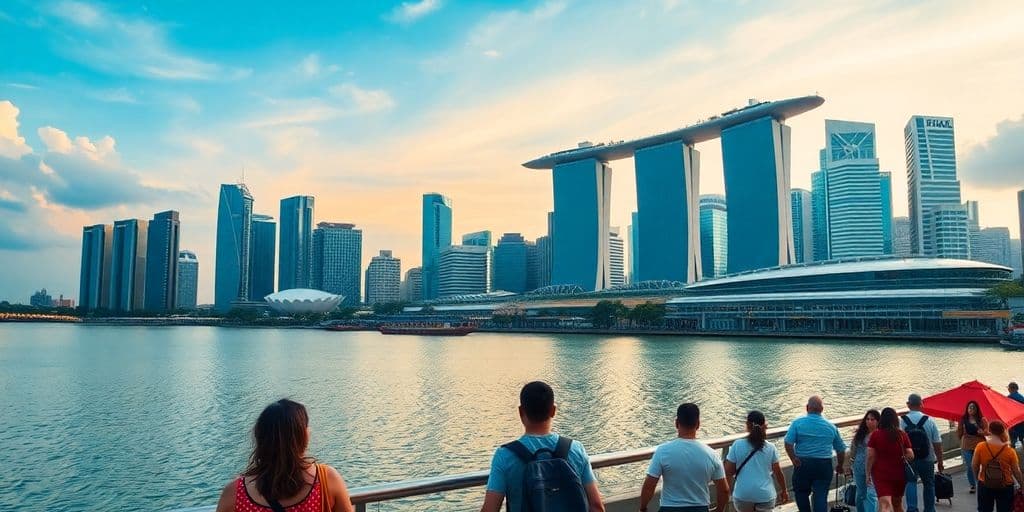
If you're planning a trip to Singapore, understanding the visa requirements in Singapore is key. Whether you're visiting for leisure, business, or planning to stay longer, knowing what type of visa you need can save you a lot of hassle. In this article, we’ll break down the different visa options, the application process, and everything else you need to know to ensure a smooth experience when visiting this vibrant city-state.
Key Takeaways
- Singapore offers various visa types depending on the purpose of your visit.
- Eligibility criteria vary for short-term and long-term visas.
- The application process can be done online, but requires specific documents.
- Visa fees and payment methods are straightforward, but check for refunds if needed.
- Extensions for your stay are possible but come with conditions and consequences for overstaying.
Understanding Visa Requirements In Singapore

So, you're thinking about heading to Singapore? Awesome! But before you pack your bags and dream of hawker food, let's get the visa situation sorted. It's not as scary as it sounds, promise. Basically, Singapore has different rules depending on where you're from and what you're planning to do there. Some people can just waltz in, while others need to jump through a few hoops. Let's break it down.
Types Of Visas Available
Singapore offers a range of visas, each tailored to specific purposes. It's not a one-size-fits-all kind of deal. You've got your tourist visas for holidays, business visas for work trips, and then the longer-term ones for employment or study. Picking the right one is key to avoid any issues. For example, if you're planning to work, don't try to sneak in on a tourist visa – that's a recipe for disaster. Make sure you understand the visa options available.
Eligibility Criteria
Okay, so you know what visa you want, but are you actually eligible? Each visa type has its own set of requirements. Things like your nationality, your reason for visiting, your financial situation, and your criminal record (or lack thereof) all play a part. It's a bit like applying for a job – they want to make sure you're a good fit. For instance, an Employment Pass has stricter requirements than a tourist visa. You'll need to provide documents to prove you meet the criteria, so get organised early.
Application Process
Right, time to actually apply. The application process varies depending on the visa type, but generally, it involves filling out forms, providing documents, and paying a fee. Many applications can be done online these days, which is handy. Just make sure you read the instructions carefully and don't leave anything out. Double-check everything before you submit it, because mistakes can cause delays or even rejection. And be prepared to wait – processing times can vary, so don't leave it until the last minute.
It's always a good idea to check the official Singapore Immigration & Checkpoints Authority (ICA) website for the most up-to-date information. Rules can change, and you don't want to rely on outdated advice.
Here's a quick checklist to keep in mind:
- Identify the correct visa type.
- Gather all required documents.
- Complete the application form accurately.
- Pay the necessary fees.
- Submit your application well in advance of your travel date.
Short-Term Visa Options
So, you're planning a quick trip to Singapore? Awesome! Let's break down the short-term visa options you've got. It's not as scary as it sounds, promise. Basically, if you're not planning on staying for ages, these are the visas you'll want to look at. They cover everything from a quick tourist visit to a business trip or even just passing through.
Tourist Visa
Okay, the tourist visa is probably what most people think of first. It's for holidays, seeing the sights, eating all the amazing food – you know, the fun stuff. The exact rules depend on where you're from, but generally, it lets you stay for a set amount of time, usually around 30 days. Some nationalities can even enter Singapore without a visa for tourism, which is a bonus! Check the tourist visas to see if you qualify.
Business Visa
Coming to Singapore for work? Then you'll likely need a business visa. This isn't for actually working in Singapore (that's a whole different ball game), but for things like attending conferences, meetings, or negotiating deals. It's usually valid for a shorter period than a tourist visa, and you'll need to show proof of your business activities, like a letter from your company.
Transit Visa
Just passing through Singapore on your way somewhere else? You might be able to get away with a transit visa. This is usually for people who have a connecting flight and need to enter Singapore to get to their next flight. The rules can be a bit strict, and it often depends on your nationality and how long your layover is. Make sure you check the specifics before you travel!
It's really important to remember that visa rules can change, and they depend on your nationality. Always check the official Singaporean immigration website for the most up-to-date information before you book your flights or make any plans. Don't get caught out!
Here's a quick rundown of things to consider:
- Check your nationality's visa requirements well in advance.
- Make sure your passport is valid for at least six months beyond your intended stay.
- Have all your supporting documents ready when you apply.
Long-Term Visa Options
When you're planning to stick around Singapore for a good while, you'll need to know about the different long-term visas available. Each of these visas has its own set of rules and benefits, and I'm going to walk you through them below in plain language.
Employment Pass
The Employment Pass is for professionals who have a solid job offer, recognised qualifications, and usually a good salary. This visa is pretty standard for higher-level roles and has a number of requirements:
- Must have a valid job contract from a recognised company.
- Need to show evidence of your skills and qualifications.
- Typically requires a minimum salary threshold.
If you tick all these boxes, you're in a strong position to apply. Sometimes, businesses will also check payment methods as part of the requirements, so keep that in mind.
S Pass
The S Pass is aimed at mid-skilled workers who have a job offer in Singapore but might not meet the high salary levels of the Employment Pass. Here are a few points to note:
- Applicants must prove their basic technical or vocational skills.
- There is a minimum monthly salary that you need to meet.
- You should have some form of recognised education or work experience.
This option tends to be popular for roles that demand a bit of technical know-how but aren't at the executive level.
EntrePass
EntrePass is the go-to option if you’re planning to start your own business in Singapore. It’s designed for entrepreneurs with innovative ideas. To break it down:
- You need a convincing business plan and sufficient seed funding.
- A company must be registered in Singapore as part of your application.
- The business idea should be innovative, often in tech or related fields.
If you’re interested in setting up your own venture, EntrePass is something to seriously consider.
Below is a quick table for a side-by-side look at the processing times and fees for these visas:
| Visa Type | Processing Time | Typical Fee (GBP) |
|---|---|---|
| Employment Pass | 2 - 3 weeks | 70 |
| S Pass | 2 - 4 weeks | 60 |
| EntrePass | 3 - 4 weeks | 100 |
Remember, when dealing with these visas, every detail is important. Ensure you gather all the necessary documents and meet every criterion before you apply. It's a bit of a process, but getting the paperwork right can save you a lot of hassle later on.
Each long-term visa option gives you a different way of staying in the country, so pick the one that best fits your plans and circumstances. Take the time to go over the requirements again if you need to, and good luck with your application!
Visa Exemptions And Special Cases
Countries With Visa-Free Access
Okay, so not everyone needs a visa to visit Singapore. Loads of countries have agreements that allow their citizens to pop over for a holiday or short business trip without all the visa hassle. It's worth checking the latest list on the Immigration & Checkpoints Authority (ICA) website because things can change, you know? For example, citizens of most EU countries, the USA, Australia, and New Zealand can usually enter Singapore for up to 90 days without a visa. Always double-check before you book your flights though!
Special Passes For Certain Nationalities
Sometimes, there are special arrangements for certain nationalities, often based on diplomatic agreements or specific circumstances. These might include things like:
- Simplified visa application processes.
- Extended periods of stay compared to standard tourist visas.
- Waivers of certain requirements.
It's all a bit case-by-case, so if you think this might apply to you, it's best to contact the Singaporean embassy or consulate in your country. They'll have the most up-to-date information. Also, if you are using refugee travel documents, there might be different rules.
Long-Term Visit Pass
The Long-Term Visit Pass (LTVP) is a handy thing if you're planning to stay in Singapore for a while, usually because you have family there. It's typically for:
- Spouses of Singapore citizens or permanent residents.
- Children of Singapore citizens or permanent residents.
- Parents of Singapore citizens.
The LTVP allows you to live, and in some cases, work in Singapore for an extended period. The application process is a bit more involved than a standard visa, and you'll need to provide quite a bit of documentation to prove your relationship to the Singapore citizen or PR.
Getting an LTVP can be a game-changer if you're looking to build a life in Singapore with your family. It offers stability and access to various services, making it easier to integrate into Singaporean society.
Application Procedures And Documentation
Required Documents For Visa Application
Okay, so you're thinking about applying for a Singapore visa? First things first, you'll need to gather all the necessary documents. The exact documents depend on the type of visa you're applying for, but there are some common ones you'll almost certainly need. These usually include:
- Your passport (with at least six months validity).
- A completed visa application form.
- A recent passport-sized photograph.
- A copy of your flight itinerary.
- Proof of accommodation (hotel booking, etc.).
Depending on your situation, you might also need to provide things like bank statements, employment letters, or invitation letters. It's always best to check the specific requirements for your visa type on the Singapore Visitor Visa application guide to be sure.
Online Application Process
Most Singapore visa applications can now be done online, which is pretty convenient. The process usually involves:
- Creating an account on the Immigration & Checkpoints Authority (ICA) website.
- Filling out the online application form.
- Uploading the required documents.
- Paying the visa fee.
Make sure you have all your documents scanned and ready to upload before you start the application. Double-check all the information you enter to avoid any delays or rejections. It's a bit of a pain, but getting it right the first time saves a lot of hassle.
Processing Times
Visa processing times can vary, so it's a good idea to apply well in advance of your intended travel date. Generally, you can expect the processing to take anywhere from a few days to a couple of weeks. Some applications might take longer if they require further assessment. You can usually check the status of your application online through the ICA website. Just keep an eye on it, and hopefully, you'll get a decision soon enough.
It's important to note that the ICA doesn't guarantee any specific processing time. Factors like the volume of applications and the complexity of your case can affect how long it takes. So, be patient and plan accordingly.
Visa Fees And Payment Methods
Standard Visa Fees
Okay, so let's talk money. Visa fees for Singapore aren't exactly cheap, but they're not outrageous either. It really depends on the type of visa you're after. A tourist visa is going to cost less than, say, an Employment Pass. The fees are subject to change, so always double-check the official ICA (Immigration & Checkpoints Authority) website for the most up-to-date information. I remember when my cousin applied for a visa a couple of years back, and the price had gone up by a few dollars from what he'd initially seen. It's a small thing, but it's better to be prepared.
Payment Options
Paying for your visa is usually pretty straightforward. You've got a few options, which is handy. Most of the time, you can use a credit card or debit card online. That's probably the easiest way to do it. Some application centres might also accept cash, but I wouldn't count on it. Always check what methods are accepted before you start the application process to avoid any hiccups. I once assumed I could pay with cash and had to scramble to find an ATM – not fun!
Here's a quick rundown of common payment methods:
- Credit/Debit Card (Visa, Mastercard, American Express)
- Online Banking Transfer
- NETS (for in-person applications, if available)
Refund Policies
Right, refunds. This is where things get a bit tricky. Generally, visa fees are non-refundable, even if your application gets rejected. I know, it's a pain. But that's usually how it works. There might be some very specific circumstances where you could get a refund, but those are rare. For example, if there was a technical error on their end that prevented your application from being processed, you might have a case. But don't count on it. Always read the fine print before you pay, so you know what you're getting into. It's better to be informed than to be surprised later. You can submit visa applications electronically.
It's important to understand that paying the visa fee doesn't guarantee that your application will be approved. The decision rests with the ICA, and they'll consider various factors before making a decision. So, make sure you meet all the eligibility criteria and provide all the required documents to increase your chances of success.
Extending Your Stay In Singapore
So, you're loving Singapore and want to stick around a bit longer? Loads of people do! But extending your visa isn't always a walk in the park. Here's the lowdown on how it works.
Visa Extension Process
First things first, you can't just decide to stay longer and hope for the best. You need to officially apply for a visa extension. The Immigration & Checkpoints Authority (ICA) handles all of this, so their website is your best friend.
Here's a general idea of the process:
- Check your current visa's conditions: Some visas can't be extended at all.
- Gather your documents: Passport, application forms, supporting letters, etc. Travel documents are essential.
- Submit your application online: The ICA has an e-service for this.
- Pay the extension fee: Have your credit card ready.
- Wait for the outcome: Processing times vary, so be patient.
Eligibility For Extension
Not everyone gets an extension, sadly. It depends on a few things, like:
- Your current visa type: Some are easier to extend than others.
- Your reason for wanting to stay longer: Tourism? Business? Something else?
- Your past immigration record: Any previous overstays or violations?
- Whether you meet the ICA's criteria: They have specific requirements for each visa type.
Basically, the ICA wants to know why you need to stay longer and whether you're a good egg. If you've been causing trouble or can't provide a good reason, your chances aren't great.
Consequences Of Overstaying
Okay, this is serious. Don't even think about overstaying your visa. The consequences can be pretty harsh. We're talking:
- Fines: A hefty dent in your wallet.
- Imprisonment: Yes, jail time is a real possibility.
- Banning from Singapore: You might not be allowed back in the future.
- Deportation: Being sent back to your home country.
Seriously, it's not worth the risk. If your visa is about to expire and you haven't gotten an extension, just leave. You can always apply for a new visa later. Overstaying is a massive headache you really don't want.
Wrapping It Up
In summary, understanding visa requirements for Singapore is pretty straightforward if you take the time to check the details. Whether you're heading there for work, a holiday, or to visit family, knowing what you need can save you a lot of hassle. Make sure to keep an eye on the latest updates, as rules can change. And if you're unsure, it’s always a good idea to reach out to the nearest Singaporean embassy or consulate. They can give you the most accurate info. So, pack your bags and get ready for your trip, just don’t forget those important documents!
Frequently Asked Questions
What types of visas can I apply for in Singapore?
In Singapore, you can apply for different types of visas like tourist visas, business visas, and transit visas, depending on your purpose of visit.
Who needs a visa to enter Singapore?
Whether you need a visa to enter Singapore depends on your nationality. Some countries have visa-free access, while others must apply for a visa before arriving.
How do I apply for a visa to Singapore?
To apply for a visa, you need to fill out an application form, gather the required documents, and submit them online or at a designated location.
What documents do I need for a visa application?
Typically, you will need a valid passport, a recent photograph, proof of accommodation, and details about your travel plans.
How long does it take to process a visa application?
Visa processing times can vary, but it usually takes about 3 to 5 working days for most applications.
Can I extend my stay in Singapore?
Yes, you can apply for a visa extension if you wish to stay longer. However, you must meet certain conditions to be eligible.
The Moveandstay editorial team writes about serviced living, workspaces, and city guides across Asia-Pacific.