Office Rental in Ho Chi Minh City: What You Need to Know

Looking for office space in Ho Chi Minh City? It can feel a bit much, right? This city is a real hub for business, and finding the right spot for your company means looking at a few things. We're talking about how much it costs, what kind of space you need, and where it's best to set up shop. This guide will help you get your head around the whole office rental in Ho Chi Minh City situation, so you can make a good choice without too much stress.
Key Takeaways
- Office rental costs in Ho Chi Minh City change based on things like location, the quality of the building, and what features are included.
- Thinking about where your office is located is a big deal; central areas are pricier but offer more, while places further out can save you money.
- You've got options for office space: from serviced offices where everything's handled, to virtual setups, or your own private space.
- The Ho Chi Minh City office market is always moving, so knowing about current demand, average prices, and what's coming next helps a lot.
- Remember, the rent isn't the only cost. Factor in service charges, utilities, and things like parking and security when working out your budget.
Understanding Office Rental Costs in Ho Chi Minh City
Cost Per Square Metre Explained
Understanding the cost per square metre is key to budgeting for office space in Ho Chi Minh City. This metric helps you compare different properties and locations effectively. The price you pay encompasses the physical space and factors like location, quality, amenities, and market demand. For example, prime business districts usually have higher rates due to accessibility and prestige. Suburban areas might offer more affordable rates. It's important to consider the total square footage needed, the layout, and additional costs like maintenance or utilities to ensure you get the best value.
Factors Influencing Rental Prices
Several factors affect office rental prices in Ho Chi Minh City. Location is a big one; areas with high accessibility and prestige command higher rents. The grade of the office building (A, B, or C) also plays a significant role. Other factors include:
- Lease Terms: Longer leases can sometimes lead to better rates.
- Amenities: Buildings with modern amenities like parking, security, and high-speed internet tend to be more expensive.
- Market Demand: High demand and limited supply in certain areas drive up prices.
It's also worth noting that incentive policies from landlords can influence the final rental cost. These might include rent-free periods or contributions towards fit-out costs. Understanding these factors will help you optimise your office rental budget.
Comparing Office Space Grades
Office spaces are typically graded as A, B, or C, each offering different levels of quality and amenities. Here's a quick comparison:
- Class A: These are the highest-quality office spaces, usually in prime locations, with modern facilities and high security. They command the highest rents.
- Class B: These offer a balance of quality and affordability. They are generally well-maintained and in good locations, but may lack some of the premium features of Class A offices.
- Class C: These are the oldest and cheapest options, often in less desirable locations, with basic amenities and lower maintenance standards.
Generally, Class A buildings have the highest rents, followed by Class B and then Class C. For example, Class A office space in Ho Chi Minh City might average $43 per square metre per month, while Class B averages $25, and Class C around $16.
Key Considerations for Office Rental in Ho Chi Minh City

Choosing an office space in Ho Chi Minh City involves more than just finding four walls. It's about making strategic decisions that align with your business goals and operational needs. Let's explore some key considerations.
Strategic Location Choices
Location, location, location! It's the mantra of real estate, and it holds true for office rentals too. The right location can significantly impact your business's accessibility, visibility, and overall success. Think about your clients, employees, and suppliers. How easy is it for them to reach your office? Is it in a preferred district or street? Proximity to the city centre is also a factor. A central location might command higher rent, but it could also attract more business and talent.
Essential Office Amenities
Consider what amenities are truly essential for your business. Do you need high-speed internet, ample parking, or 24/7 security? These features can impact your employees' productivity and your clients' perception of your company. Some standard amenities include:
- Parking: The average rent for a monthly parking slot in Ho Chi Minh City is $67 for a car.
- Security: Class A office buildings have higher security standards and costs than Class B or C office buildings.
- Internet: The average fixed broadband download speed in Vietnam is 70.86 Mbps.
Don't get swayed by fancy extras you don't need. Focus on the amenities that will genuinely improve your business operations and employee satisfaction.
Lease Agreement Terms
Before signing on the dotted line, carefully review the lease agreement. Pay attention to the lease duration, rent escalation clauses, and any break clauses. Understand your responsibilities for maintenance and repairs. Don't be afraid to negotiate terms that work better for your business. Here are some points to consider:
- Lease Duration: How long are you committing to the space?
- Rent Escalation: How will the rent increase over time?
- Break Clauses: Can you terminate the lease early if needed?
Types of Office Spaces Available
Serviced Office Solutions
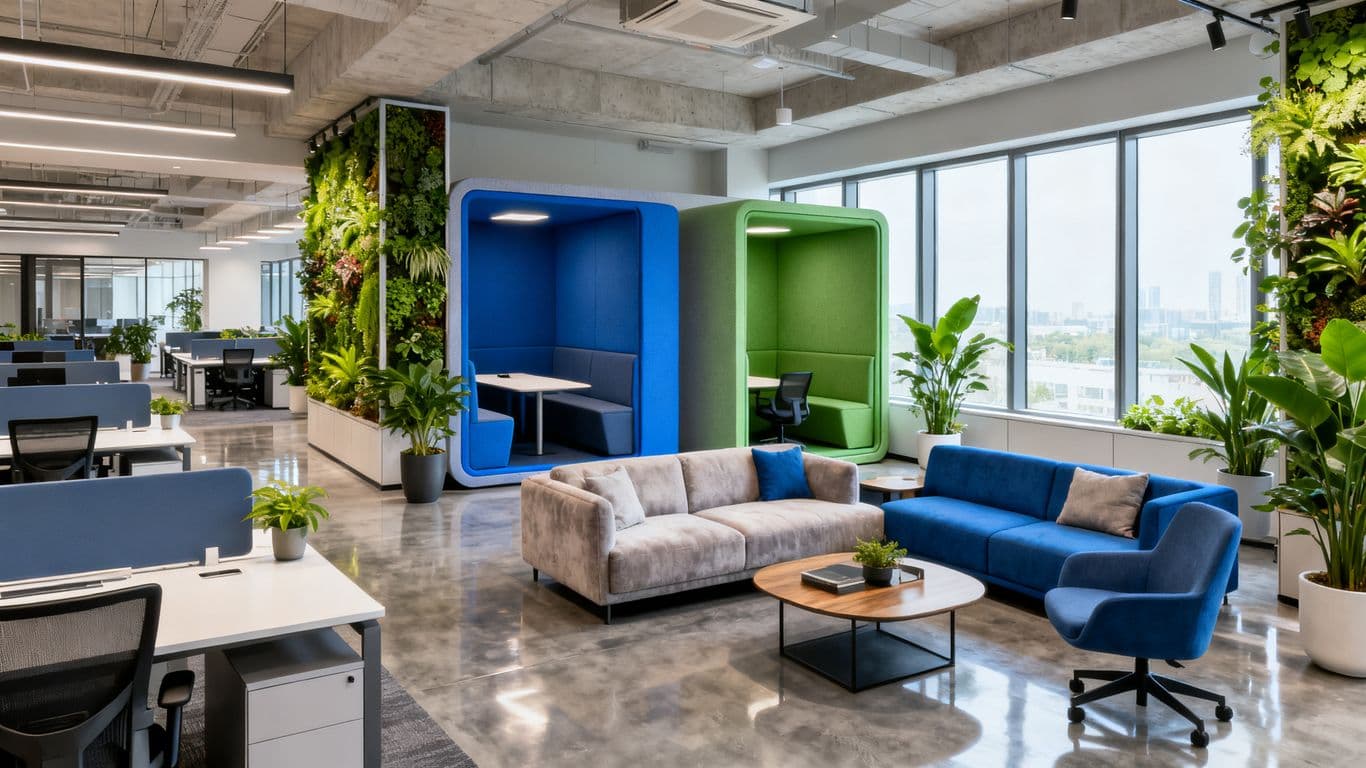
Serviced offices are a pretty popular choice these days, especially for businesses that want flexibility and convenience. Basically, you rent a fully equipped office space that's managed by someone else. This usually includes furniture, internet, and reception services. It's a good option if you don't want to deal with the hassle of setting up an office from scratch.
- Ready-to-use infrastructure
- Flexible lease terms
- Access to shared facilities
Serviced offices can be a bit more expensive than traditional rentals, but you're paying for the convenience and the fact that everything is taken care of. It's worth considering if you value time and simplicity.
Virtual Office Options
If you don't actually need a physical office space but still want a professional business address, a virtual office could be the answer. You get a mailing address, phone answering services, and sometimes access to meeting rooms. It's a cost-effective way to maintain a professional image without the overhead of a physical office. Think of it as a way to have a presence in Ho Chi Minh City without actually being there all the time. You can find a diverse selection of offices with virtual options.
Private Office Benefits
Private offices are your traditional office spaces. You lease a dedicated area that's just for your business. This gives you complete control over the layout, design, and security. It's a good choice if you need privacy and want to create a specific company culture. However, it also means you're responsible for all the maintenance and setup costs.
Here's a quick comparison:
| Feature | Serviced Office | Virtual Office | Private Office |
|---|---|---|---|
| Physical Space | Yes | No | Yes |
| Setup Costs | Low | Very Low | High |
| Flexibility | High | High | Low |
| Control | Medium | Low | High |
| Maintenance | Included | N/A | Your responsibility |
Navigating the Ho Chi Minh City Office Market
Current Market Demand and Supply
Okay, so the Ho Chi Minh City office market is pretty dynamic, right? You've got demand that's always shifting, and the supply of office spaces trying to keep up. Right now, there's a good mix of older buildings and newer developments, but it's worth keeping an eye on vacancy rates. If vacancy is low, you might find yourself in a bit of a squeeze when negotiating prices. On the flip side, higher vacancy could mean better deals, but also potentially less choice in terms of location and amenities. It's a bit of a balancing act, really.
Average Rental Prices by Grade
Let's talk money. Office rental prices in Ho Chi Minh City vary a lot depending on the 'grade' of the building. You've got your Grade A offices, which are the top-tier ones – think modern facilities, prime locations, and all the bells and whistles. Then you've got Grade B and C, which are generally older and might not have all the fancy stuff, but they can be a lot more budget-friendly. Here's a rough idea of what you might expect:
| Grade | Average Rental Price (USD per sq m per month) |
|---|---|
| Grade A | $40 - $60 |
| Grade B | $25 - $40 |
| Grade C | $15 - $25 |
Keep in mind these are just averages, and prices can change based on the specific location, building amenities, and the overall market conditions.
Future Market Trends
So, what's coming up for the Ho Chi Minh City office market? Well, there are a few things to keep in mind. First off, there's a lot of new construction happening, so we're likely to see an increase in supply over the next few years. This could put some downward pressure on rental prices, which is good news for renters. Also, there's a growing trend towards flexible workspaces and co-working spaces, so that's something to consider if you're not looking for a traditional long-term lease. Finally, keep an eye on infrastructure developments, like the new metro system. These can have a big impact on the accessibility and desirability of different areas.
It's worth remembering that the Ho Chi Minh City office market can be quite competitive. Doing your homework, understanding the different districts, and being prepared to negotiate are all key to finding the right space for your business at a price that works for you. Don't be afraid to get some local advice – it can make a big difference.
Additional Costs Beyond Base Rent
It's easy to focus solely on the base rent when looking at office spaces in Ho Chi Minh City, but that's only part of the story. There are several other costs that can significantly impact your overall budget. Failing to account for these additional expenses can lead to some nasty surprises down the line.
Service Charges and Maintenance
Service charges usually cover the upkeep of common areas within the building. This includes things like cleaning, security, and general maintenance. The exact amount can vary depending on the building's grade and the services offered. For example, a Class A building will likely have higher service charges than a Class B building due to better facilities and more comprehensive services. Savills Vietnam reported that the average monthly service charge for Class A office buildings can be around $6 per square metre, while Class B buildings might be closer to $4 per square metre. These charges are usually mandatory and non-negotiable, so it's important to factor them into your budget from the start.
Utility and Internet Expenses
Don't forget about utilities! Electricity, water, and internet access are essential for any modern office. These costs can fluctuate depending on your usage, so it's a good idea to get an estimate from the landlord or previous tenants. Internet costs can also vary depending on the speed and bandwidth you require. It's worth shopping around for different providers to get the best deal. You might find that some landlords include basic internet in the service charge, but this is not always the case. Consider the lease agreement terms carefully to understand what's included and what isn't.
Parking and Security Fees
If you or your employees drive to work, parking costs can quickly add up. Many office buildings in Ho Chi Minh City charge a monthly fee for parking spaces. The cost will depend on the location and the availability of parking. Security is another important consideration. While basic security is usually included in the service charge, you may need to pay extra for additional security measures, such as access cards or CCTV monitoring, especially if you have valuable equipment or sensitive data.
It's always a good idea to ask for a detailed breakdown of all additional costs before signing a lease. This will help you avoid any unexpected expenses and ensure that you have a clear understanding of your total office rental budget.
Choosing the Right District for Your Business
Choosing the right district in Ho Chi Minh City can significantly impact your business's success. It's not just about finding an office; it's about finding the right environment for your company to thrive. Let's explore the key considerations.
Benefits of Central Business Districts
Central Business Districts (CBDs) like District 1 and District 3 offer a range of advantages. These areas are the heart of the city's commercial activity, providing unparalleled access to clients, partners, and a skilled workforce.
- Prestige: A CBD address lends credibility to your business.
- Networking: Opportunities for collaboration and partnerships are abundant.
- Accessibility: Excellent transport links make commuting easy for employees and clients.
However, CBDs also come with higher rental costs and increased competition. You'll need to weigh these factors carefully.
Advantages of Suburban Locations
Suburban districts like District 7 (Phu My Hung) or District 2 (Thao Dien) offer a different set of benefits. These areas are generally more affordable and offer a more relaxed environment.
- Lower Costs: Rental rates are significantly lower compared to CBDs.
- Spacious Offices: You can often find larger office spaces for the same budget.
- Residential Proximity: Many employees prefer working closer to where they live.
Of course, suburban locations may lack the prestige and networking opportunities of the CBD. Access to public transport might also be less convenient. Consider the office space needs of your business.
Accessibility and Transport Links
Accessibility is a crucial factor, regardless of whether you choose a CBD or a suburban location. Consider the following:
- Public Transport: Are there bus routes, metro lines, or train stations nearby?
- Road Infrastructure: Is the area easily accessible by car or motorbike?
- Parking: Is there ample parking available for employees and visitors?
A well-connected office location can save your employees time and money, improving morale and productivity. It also makes it easier for clients and partners to visit your office, boosting your business relationships.
Here's a simple table illustrating the trade-offs:
| Feature | CBD | Suburban Locations |
|---|---|---|
| Rental Costs | High | Lower |
| Accessibility | Excellent | Variable |
| Prestige | High | Lower |
| Office Space Size | Generally smaller, more expensive per sqm | Generally larger, more affordable per sqm |
Optimising Your Office Rental Budget

Negotiating Lease Terms
Getting the best deal on your office space often comes down to how well you can negotiate the lease. Don't just accept the first offer. Research market rates, understand what's included in the base rent, and be prepared to walk away. A good starting point is to identify areas where you can reasonably ask for concessions. For example:
- Rent-free periods: Especially useful when fitting out the space.
- Caps on rent increases: Protects you from unexpected hikes.
- Break clauses: Provides flexibility if your business needs change.
Remember, everything is negotiable. Landlords want to fill their spaces, so they're often willing to compromise to secure a tenant. Don't be afraid to ask for what you need.
Identifying Cost-Saving Opportunities
Beyond the base rent, there are plenty of other areas where you can save money. It's about being smart and thinking creatively. Consider these options:
- Subleasing: If you have excess space, subleasing a portion can offset your rental costs.
- Shared amenities: Opt for buildings with shared facilities like meeting rooms or kitchens to reduce individual fit-out expenses.
- Flexible workspace: Explore options like serviced office solutions that include utilities and maintenance in the rental price.
Long-Term Financial Planning
Your office rental is a significant expense, so it's important to factor it into your long-term financial planning. Think about how your business might grow and how that will impact your space needs. Consider these points:
- Growth projections: Estimate your future staffing levels and space requirements.
- Contingency planning: Have a plan in place if your business experiences unexpected changes.
- Total cost of occupancy: Factor in all expenses, including rent, utilities, maintenance, and other fees, to get a clear picture of your overall costs.
| Expense Category | Estimated Monthly Cost | Notes |
|---|---|---|
| Base Rent | $5,000 | Based on current market rates. |
| Utilities | $500 | Electricity, water, gas. |
| Internet & Phone | $200 | High-speed internet and phone lines. |
| Maintenance & Repairs | $300 | Routine maintenance and minor repairs. |
| Total Monthly Cost | $6,000 | Estimate to help with financial planning for office rental costs. |
Conclusion
So, there you have it. Renting an office in Ho Chi Minh City can seem a bit much at first, with all the different things to think about. But, if you do your homework and know what you're looking for, it's totally doable. Think about your budget, what kind of space you really need, and where you want to be. Getting some local help can make a big difference too. With a bit of planning, you'll find a great spot for your business to grow in this busy city.
Frequently Asked Questions
Why is Ho Chi Minh City a good place to rent an office?
Ho Chi Minh City is a lively place in the south of Vietnam. It's a big city, full of energy, and a great spot for businesses. It's known as Vietnam's money hub and has a huge number of skilled workers, around 3.2 million. Plus, a new metro system is coming, which will make getting around much easier and cut down on traffic.
What affects the price of office rentals in Ho Chi Minh City?
The cost of office space in Ho Chi Minh City changes a lot based on where it is, how good the office is, and what extras it offers. For example, a top-notch office in a central area will cost more than a basic one in a less busy part of town.
What are the different types of office buildings, and how do they compare?
Office spaces are often put into groups: Class A, Class B, and Class C. Class A offices are the best and most expensive, usually in prime spots. Class B offices are good, but a bit older and cheaper. Class C offices are the oldest and cheapest, often needing more work.
Are there other costs besides the main rent when renting an office?
Beyond the basic rent, you'll likely pay for service charges (like cleaning and upkeep), utilities (electricity, water, internet), and sometimes extra fees for parking and security. These extra costs can add up, so it's good to know about them upfront.
Can I save money on office rent in Ho Chi Minh City?
Yes, you can often save money by talking about the lease terms with the landlord. Also, look for ways to cut costs, like choosing an office that fits your needs exactly, so you're not paying for space or services you don't use. Planning your money for the long run helps too.
How important is the location when choosing an office?
Yes, it's very important. Central areas are great for showing off your business and getting customers, but they cost more. Suburban areas are cheaper and can be good if you don't need to be right in the middle of everything. Think about how easy it is for your staff and clients to get there, whether by public transport or car.
Filed under
The Moveandstay editorial team writes about serviced living, workspaces, and city guides across Asia-Pacific.