
No Car, No Problem: Navigating Hong Kong’s Public Transport
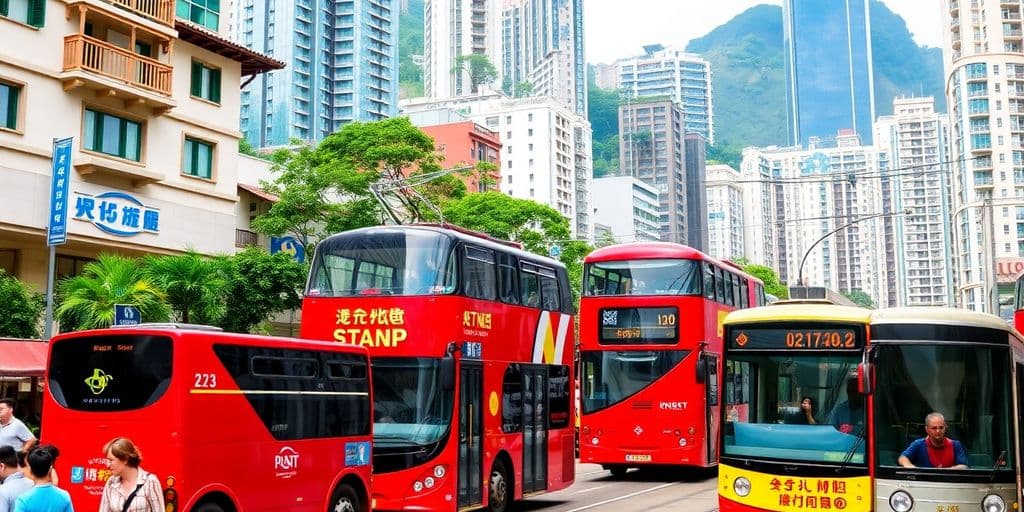
Hong Kong is a bustling metropolis, and getting around without a car is not just possible, it can be quite enjoyable. With an extensive network of public transport options, including the MTR, buses, trams, and ferries, visitors and locals alike can navigate the city with ease. This guide will walk you through the various modes of public transportation in Hong Kong, helping you make the most of your travel experience.
Key Takeaways
- The MTR is the fastest and most efficient way to travel across the city.
- Buses are great for specific routes but can be tricky in busy areas.
- Trams offer a unique sightseeing experience at a low cost.
- Ferries provide scenic views and are essential for reaching the outlying islands.
- Walking is a great way to explore and discover hidden spots in the city.
The MTR: Your Best Friend In Hong Kong
The MTR, short for Mass Transit Railway, is without a doubt the easiest and most efficient way to get around Hong Kong. This underground high-speed train system is fast, affordable and incredibly user-friendly, even for first-time visitors. It's clean, air-conditioned and safe, making it a comfortable option no matter the weather. I frequently meet clients all over the city, and if I depended on the bus, I would constantly be late to my appointments.
Understanding The MTR System
The MTR network is extensive, covering most major areas of Hong Kong. It consists of several lines, each distinguished by a different colour and name. The MTR system map is your best friend here. It's useful for getting to places that are far away fast and cheap, like if you want to go from Kennedy Town to Chai Wan.
- Island Line (Blue):
- Tsuen Wan Line (Red)
- Kwun Tong Line (Green)
The MTR is more than just a transport system; it's a vital part of Hong Kong life. It connects people, places and experiences, making the city feel smaller and more accessible.
Navigating The Stations
MTR stations are well-signed in both English and Chinese, making them easy to navigate. Each station has multiple exits, so it's important to check which exit is closest to your destination before leaving the station. Google Maps is pretty good at helping you navigate the MTR and figure out which exit to take to get where you’re going. And yes, there is 4G everywhere on the MTR, except sometimes for 5 seconds in between stops while you’re in the middle of the tunnel.
- Look for the colour-coded line signs.
- Follow the exit signs carefully.
- Use the station maps to find your way.
Tips For Using The MTR
Using the MTR is straightforward, but here are a few tips to make your journey even smoother:
- Get an Octopus Card: This rechargeable card can be used on all forms of public transport in Hong Kong, including the MTR. It saves you the hassle of buying single journey tickets.
- Avoid Peak Hours: The MTR can get very crowded during rush hour (8:00-9:30 am and 5:30-7:00 pm). If possible, travel outside these times.
- Be Mindful of Etiquette: Let passengers disembark before you try to board the train. Avoid eating or drinking on the train. Keep your voice down when talking on your phone.
| Feature | Description be warned, if you’re new to the city it’s easy to get lost on the MTR as you get used to it. But don’t worry, there are helpful signs everywhere, including lighted maps on the MTR itself.
Buses: Double-Deckers And Mini Buses
The Iconic Double-Decker Experience
Hong Kong's double-decker buses are an icon, and riding on the top deck offers great views. They cover most of Hong Kong Island, Kowloon, and the New Territories. The routes are extensive, and they're generally a cheap way to get around. However, it's worth noting that while the bus routes are more structured than minibuses, they can still be a bit confusing for first-timers.
- Look for the bus number and destination displayed at the front.
- Pay with your Octopus card when you board.
- Enjoy the view from the top deck!
Challenges With Mini Buses
Mini buses, especially the green ones, can be a bit of a lottery. Figuring out their routes and stops can be tricky. They often don't have clear timetables, and the stops aren't always well-marked. Plus, many drivers don't speak much English, which can make asking for directions difficult. If you're feeling adventurous, give them a go, but be prepared for a bit of a challenge.
When To Use Buses
Buses are a good option when the MTR doesn't quite reach your destination, or if you want to enjoy the scenery. They're also useful for travelling to places like Stanley or The Peak, where the bus journey itself is part of the experience. Just be sure to plan your route in advance and allow for potential delays.
Buses can be a great way to see the city, but they can also be slow and crowded, especially during peak hours. It's worth checking the estimated journey time on a transport app before you set off, and be prepared to stand if necessary.
Trams: Riding The Hong Kong Rails
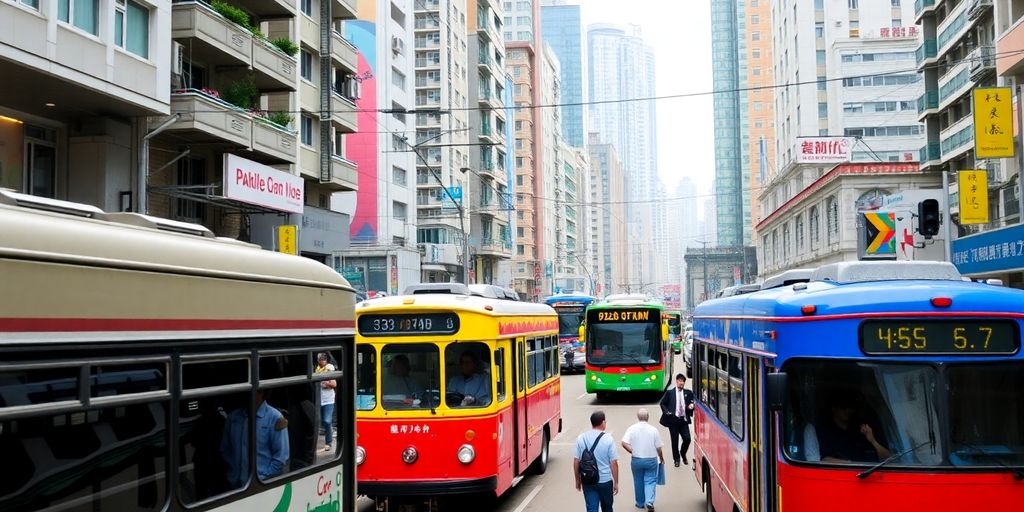
Catching a tram, or a "Ding Ding" as the locals call them, is a must-do. These trams have been part of Hong Kong's charm for over a century. They offer a unique way to see the city from a different perspective. It's not the fastest way to get around, but it's perfect for taking it easy and soaking in the sights.
The Tram Route Overview
The tram lines mainly run along the north shore of Hong Kong Island. You'll find them on roads like Des Voeux Road, Queensway, Hennessy Road, and Johnston Road. If you're near the harbour, just head north, and you'll spot the tracks. The trams operate along key roads on Hong Kong Island, making it easy to hop on and off.
Benefits Of Taking The Tram
There are several reasons why you should consider taking the tram:
- It's cheap. The fare is a flat rate, no matter how far you go.
- It's a great way to see the city. You'll get a street-level view of Hong Kong life.
- It's iconic. Riding a Ding Ding is a classic Hong Kong experience.
The tram offers a unique perspective of the city. It's a slow, relaxing way to travel, allowing you to observe the daily life of Hong Kong residents. The open windows provide a sensory experience, with the sounds and smells of the city adding to the charm.
Tram Fares And Payment Options
The tram fare is a flat rate of HKD $3.00. You can pay with your Tourist Octopus Card or with exact change. When you get on the tram, board at the back and pay when you get off at the front. The trams stop automatically at each stop, so there's no need to press any buttons.
Ferries: Unlocking The Secrets Of Hong Kong's Islands
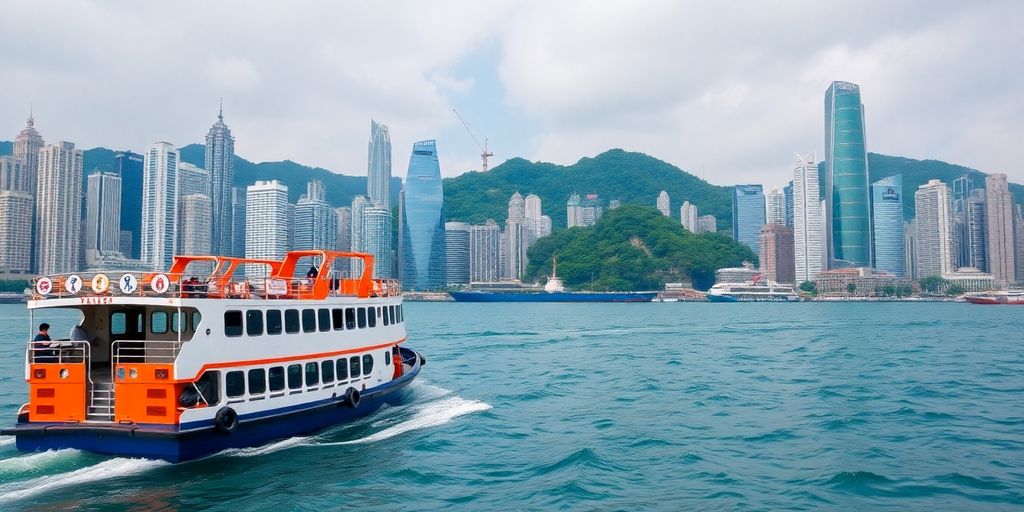
Ferries are a fantastic way to see a different side of Hong Kong. I mean, sure, the MTR is efficient, and buses get you pretty much everywhere, but there's something special about being on the water. It's like escaping the city without actually leaving. Plus, some of the views are just incredible. Think about the skyline at sunset – unbeatable!
Star Ferry: A Scenic Journey
The Star Ferry is more than just a way to cross the harbour; it's an experience. It's been running for ages, and it's still super cheap. For just a few Hong Kong dollars, you get a mini-cruise with amazing views of both Hong Kong Island and Kowloon. It's a must-do, especially for first-timers. I always recommend taking the Star Ferry at least once, even if you're in a rush. It's worth the detour.
Outlying Island Ferries
Want to get away from the crowds? Head to one of the outlying islands. Cheung Chau, Lantau, and Peng Chau are all easily accessible by ferry, and they offer a completely different vibe to the city. Think beaches, hiking trails, and seafood restaurants. The ferries themselves are pretty decent, with options for both fast and slow services. The slow ferries are great if you want to enjoy the scenery, while the fast ferries are perfect if you're short on time.
Tips For Ferry Travel
Here are a few things I've learned from my own ferry adventures:
- Octopus Card is your friend: Most ferries accept the Octopus card, which makes paying super easy.
- Check the schedules: Ferry schedules can vary depending on the day and time, so it's always a good idea to check before you go.
- Seating: Try to get a seat near the front or on the upper deck for the best views.
Don't forget your camera! The views from the ferry are stunning, and you'll want to capture those memories. Also, bring a light jacket, as it can get a bit breezy on the water, even on a warm day. Finally, be prepared for crowds, especially on weekends and public holidays.
Walking: The Best Way To Discover Hidden Gems
There's honestly no better way to really see Hong Kong than by just wandering around on foot. I've spent hours just walking, and you always find something new. The city's pretty compact, and most street signs are in English, which helps a lot. Plus, there are landmarks everywhere, so you don't get too lost.
Exploring On Foot
Walking lets you see things you'd miss on the MTR or in a taxi. You can duck down side streets, check out tiny shops, and find amazing food places that aren't in any guidebook. It's a great way to get a feel for the real Hong Kong. I find that the best way to explore is without a fixed plan. Just pick an area and start walking. You'll be surprised what you find. For example, I recently discovered a cool little tea shop tucked away in Sheung Wan, and I never would have found it if I hadn't been wandering around. If you want to experience Hong Kong like a local, walking is the way to do it.
Best Walking Routes
Some of my favourite walking routes include:
- The Peak Circle Walk: Easy, with amazing views.
- Central to Sheung Wan: Full of history and interesting shops.
- Tsim Sha Tsui Promenade: Great for harbour views, especially at night.
Don't be afraid to explore the backstreets. That's where you'll find the most interesting things. Central, especially, is worth exploring on foot. People often miss out because of the steep streets, but there are loads of hidden gems up there. Think of it like a layered rice paddy terrace – don't skip those little walkways!
Safety Tips While Walking
- Wear comfortable shoes: You'll be doing a lot of walking, so this is important.
- Stay hydrated: Especially in the summer, it gets hot and humid.
- Watch out for traffic: Hong Kong drivers can be a bit crazy.
- Be aware of your surroundings: Pickpockets can be a problem in crowded areas.
- Bring a portable charger: You don't want your phone to die when you're trying to find your way back to your hotel.
It's also a good idea to have a map handy, either on your phone or a paper one. And if you're planning to walk in the evening, wear reflective clothing or carry a torch, so you're visible to traffic.
Navigating The City With Apps
Essential Transport Apps
Okay, so you're in Hong Kong and ready to explore. Forget paper maps – it's all about the apps these days. Having the right apps on your phone can seriously change how you get around. I remember trying to find a specific dim sum place in Mong Kok without data – total disaster!
- MTR Mobile: This is a must. It gives you the full MTR map, tells you the best routes, journey times and even platform info. Super handy for avoiding those rush hour crowds.
- Citymapper: While Google Maps is okay, Citymapper is way better for public transport. It combines all the options – MTR, buses, trams, ferries – and gives you real-time updates. Plus, it tells you how much it'll cost.
- Google Maps: Still useful, especially for walking directions and finding nearby restaurants or shops. Just be aware that the GPS can be a bit wonky in the super dense areas. You can use Google Maps for navigation, which provides real-time traffic updates and public transit information.
I once relied solely on Google Maps to find a specific building in Wan Chai. After wandering around for what felt like an eternity, I finally stumbled upon it. Lesson learned: always double-check with another app or ask a local!
Using Maps Effectively
Knowing how to use maps properly is key. It's not just about typing in your destination; it's about understanding the map itself. Here are a few tips:
- Download offline maps: Data can be expensive, so download the area you're planning to explore beforehand. This way, you can still navigate even without a connection.
- Learn to read the symbols: Hong Kong maps can be overwhelming with all the street names and building numbers. Familiarise yourself with the common symbols for bus stops, MTR stations, and points of interest.
- Use landmarks: Instead of relying solely on street names, try using landmarks to orient yourself. "Meet me by the HSBC building" is much easier than "Meet me at 1 Queen's Road Central".
Real-Time Updates And Schedules
Public transport in Hong Kong is generally very reliable, but things can still happen. A typhoon, a traffic accident, or just general delays can throw your plans off. That's where real-time updates come in.
- Check the MTR app for service alerts: The MTR app will notify you of any delays or disruptions on the lines. This can save you a lot of time and frustration.
- Use the HKeMobility app for bus updates: This app gives you real-time information on bus arrival times and route changes. Super useful for avoiding long waits at the bus stop.
- Follow transport operators on social media: The MTR and major bus companies often post updates on their social media accounts. This can be a good way to get information quickly. For example, the Octopus card is a must-have.
Tips For First-Time Visitors
Understanding The Octopus Card
Right, let's talk about the Octopus card. It's basically your all-access pass to Hong Kong's public transport, and honestly, life in general. You can use it on the MTR for solo travellers, buses, trams, ferries, and even in some shops and restaurants. Think of it like a contactless payment card that works everywhere.
- You can buy one at any MTR station customer service centre.
- There's a refundable deposit, so you don't need to worry about losing all your money if you decide to leave Hong Kong.
- Top it up at stations or convenience stores. Seriously, get one. You'll thank me later.
It's worth noting that while most places accept Octopus, it's always a good idea to carry a bit of cash, especially if you're planning on visiting smaller shops or markets in more remote areas. You never know when you might stumble upon a hidden gem that only takes cash.
Common Mistakes To Avoid
Okay, so here are a few things to watch out for to avoid looking like a total tourist:
- Don't eat or drink on the MTR. It's a big no-no, and you could get fined.
- Avoid peak hours if you can. The MTR gets seriously packed during rush hour (8-9am and 5-7pm). If you're not a fan of being squished, try to travel at other times.
- Don't block the escalators. Stand to the right and let people walk on the left. It's just common courtesy.
Cultural Etiquette On Public Transport
Hong Kongers are generally polite and efficient, so it's good to be aware of a few cultural norms when using public transport:
- Queue properly. People generally line up for buses and the MTR. Jumping the queue is frowned upon.
- Offer your seat to those who need it. If you see an elderly person, a pregnant woman, or someone with a disability, offer them your seat. It's the right thing to do.
- Keep the noise down. Avoid loud conversations or playing music without headphones. People are generally trying to get somewhere quietly.
Here's a quick table summarising some key etiquette points:
| Etiquette Point | Description |
|---|---|
| Queueing | Always queue properly for buses and the MTR. |
| Offering Seats | Offer your seat to elderly, pregnant, or disabled individuals. |
| Noise Levels | Keep conversations and music at a reasonable volume. |
| Eating and Drinking | Refrain from eating or drinking on the MTR. |
| Blocking Escalators | Stand to the right on escalators to allow others to pass on the left. |
Wrapping Up Your Journey
So there you have it—getting around Hong Kong without a car is not just possible, it can actually be quite enjoyable. With a mix of the MTR, trams, ferries, and a bit of walking, you can explore the city with ease. Sure, the buses can be a bit tricky, but once you get the hang of it, you’ll find your way around just fine. Plus, you’ll get to see so much more of the city up close. Just remember to wear comfy shoes and keep your Octopus card handy. Whether you’re a local or just visiting, Hong Kong’s public transport is a great way to experience all the sights and sounds this vibrant city has to offer.
Frequently Asked Questions
What is the MTR and why is it important in Hong Kong?
The MTR, or Mass Transit Railway, is Hong Kong's main underground train system. It's fast, clean, and connects many parts of the city, making it the best way to travel around.
How do I use the Octopus card?
The Octopus card is a smart card you can use for almost all public transport in Hong Kong. Just touch it on the card reader when you enter and exit. You can also use it in shops.
Are buses a good option for getting around?
Buses can be useful, but they are often slower and can be confusing if you don't know the routes well. If you have a specific route you take regularly, they can be helpful.
What should I know about taking the ferry?
Ferries are a fun way to see the city from the water. The Star Ferry is a must-try for its beautiful views. Just check the schedule and be aware of the weather.
Is walking a good way to explore Hong Kong?
Yes! Walking is a great way to discover hidden spots and enjoy the city's vibe. Just remember to wear comfortable shoes and stay safe.
Which apps should I download for public transport?
Download apps like Google Maps for directions and the Octopus app to check your card balance. These will help you navigate the transport system easily.
Filed under
The Moveandstay editorial team writes about serviced living, workspaces, and city guides across Asia-Pacific.
Read next

Serviced Offices Surge in Popularity as Businesses Embrace Flexible Leasing
May 3, 2026

Hong Kong Serviced Apartment Market Buzzes with Sales and Investment Activity Amidst Shifting Valuations
May 3, 2026

ONYX Hospitality Group Elevates Shama Serviced Apartments with New Lifestyle Concept and Ambitious Expansion
Apr 26, 2026